
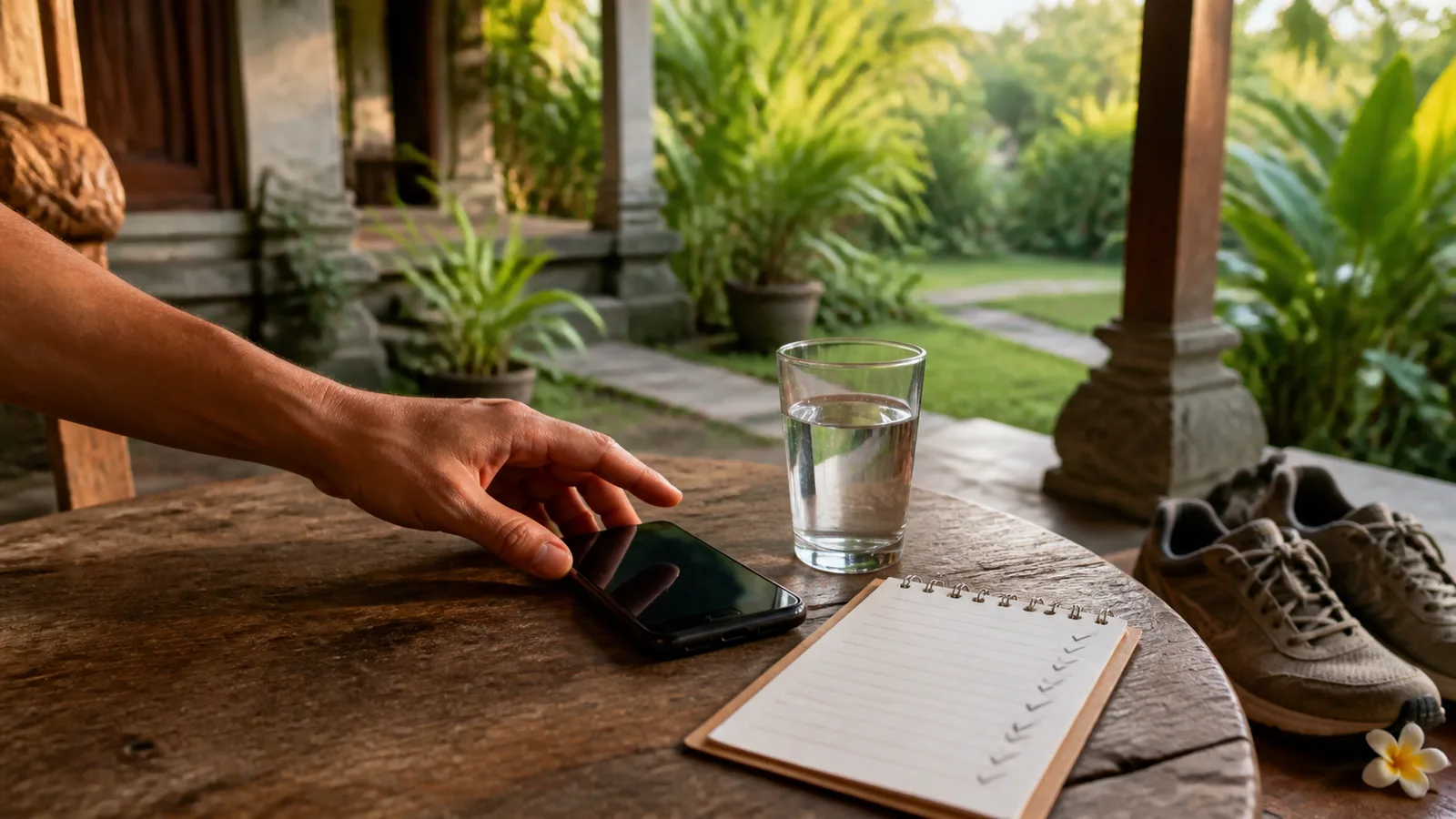
A craving is a signal to act, not an instruction you have to follow. For the next 20 minutes, make connection the first move: call someone in recovery, say plainly what is happening and stay on the phone while you change your setting. Then add movement, a safe sensory reset, writing, prayer or meditation until the urge begins to shift.
If you may be in dangerous withdrawal, have already used and could be at risk of overdose, cannot stay safe, or may harm yourself or someone else, skip this plan and seek urgent medical help. Use the urgent help guidance for Bali, call local emergency services or go to the nearest emergency department.
The 20-minute craving plan
Do these steps in order. The aim is not to produce a perfect state of mind. It is to avoid making a permanent decision during a temporary wave.
Minutes 0–5: pick up the phone
Call a sponsor, fellowship member, recovery friend, clinician or another safe person. Calling matters because it interrupts secrecy and practises the habit that recovery depends on: connection and honest sharing.
Do not wait until you can explain the craving neatly. Say: “I am having a strong craving and I need to stay connected for the next 20 minutes.” If the first person does not answer, call the next one. Send a message as well, but keep calling until you reach a human voice.
If you are alone, ask whether you can meet in a safe place or go together to the next suitable Bali recovery meeting. A craving often tries to negotiate for privacy. Do the opposite.
Minutes 5–10: change the scene and move
Stand up, put on shoes and walk outside if it is safe. If you cannot go outside, walk around the building, stretch or do a few minutes of gentle movement indoors.
There are two useful ideas here. First, alcohol and drug cues can become tied to rooms, routes, people, screens and routines. Changing context can interrupt the automatic sequence between cue and action. Second, research on exercise in substance-use treatment suggests movement can reduce craving for some people, although it is a support tool rather than a guaranteed treatment.
In Bali, heat, traffic and uneven roads matter. Choose shade, take water and do not turn the walk into a punishing workout. The purpose is to create a clean break in the moment, not to exhaust yourself.
Minutes 10–15: use a safe sensory reset
A normal cool or warm shower can mark the transition into a different part of the day. Notice the temperature, the sound and the physical sensation. Put on clean clothes afterwards and move to a different room.
This is a context switch, not a detox treatment. Avoid extreme cold plunges, very hot water or anything that makes you dizzy or unwell. If you are medically unwell, severely intoxicated or withdrawing, a shower is not a substitute for assessment.
Minutes 15–20: write, sit and let the wave move
Write for five minutes without trying to sound wise. Start with three lines:
- What am I feeling in my body?
- What happened just before this craving?
- Who and what will help me stay safe for the next hour?
Putting feelings into words can create a little distance from them and reveal the trigger beneath the urge: fear, anger, loneliness, exhaustion, shame or simple exposure to a familiar cue.
Then try sitting with the craving rather than arguing with it. In relapse-prevention work this is often called urge surfing. Notice where the urge appears in the body, describe the sensations and watch how they change. A wave rises, peaks and passes; you do not have to make it disappear before choosing not to act on it.
Meditation, slow breathing and prayer can all support this pause. You might say, “This is a craving. It is uncomfortable, it is changing, and I do not have to obey it.” If prayer is part of your recovery, ask for enough willingness to take the next right action rather than demanding that the feeling vanish.
What to do when 20 minutes is not enough
Repeat the plan with more connection. Call another person, leave the risky setting, attend a meeting and arrange not to be alone. Eat a normal meal or snack and drink water if you have neglected basic needs, but do not mistake hunger or dehydration advice for medical care.
If Twelve-Step fellowship is part of your recovery, choose a current morning and evening meeting and build the rest of the day between them. Recheck the official AA Bali schedule or NA Bali schedule before travelling, because times and venues can change. Stay afterwards long enough to tell someone what the day has been like.
Cravings that are frequent, escalating or repeatedly leading towards use deserve professional attention. Tell your counsellor, prescriber or treatment provider. Evidence-based treatment can include behavioural care, medication for some substance-use disorders and a more intensive level of support. Do not start, stop or change medication based on an article or advice from a peer.
Make the next craving easier to handle
Save a short plan in your phone before you need it:
- Three people I will call, in order.
- One safe place I can go.
- The next two suitable meetings.
- One simple movement option.
- The warning signs that mean I need medical or professional help.
The skill being built is not “never feel a craving”. It is noticing the craving, telling the truth quickly and moving towards people instead of towards isolation. Every call makes that response more available the next time.
If you have already drunk or used, move to the after-relapse action plan. If you are building structure around the first days, use the first week sober in Bali guide.